Video placement
Client video goes hereAdd the 16:9 MP4 file in CONFIG.video.src and a poster image in CONFIG.video.poster. Nothing plays until the real video is supplied.
Property decoupling in Singapore
Know what decoupling costs before you sign anything
Decoupling lets one spouse buy the other's share of your private home, so the outgoing spouse can buy the next property without the 20% ABSD a Singapore Citizen pays on a second home. Our free calculator works out the stamp duty, the new loan and the cash each of you ends up with.
The questions couples ask
A second home means 20% ABSD, unless one of you owns nothing
A Singapore Citizen who already owns a home pays 20% Additional Buyer's Stamp Duty on a second residential property. On a $1.5 million condo, that is $300,000 on top of the price.
Decoupling is one legal way to avoid it. One spouse buys out the other's share, the outgoing spouse owns no residential property, and they buy the next home at first-property rates. It also comes with questions of its own, and most of them are about money.
- Can my spouse take over the whole loan on one income?
- How much stamp duty do we pay to move a share between us?
- We bought in 2025. Will seller's stamp duty cancel out the saving?
- What happens to the CPF I used for this home?
- Is decoupling still allowed after the IRAS cases on 99:1 splits?
- When can I safely sign for the next property?

Why we built this
One calculator for both spouses
A decoupling has two sets of numbers. The buying spouse needs to know the stamp duty, the cash and CPF needed, and whether the bank will lend on one income. The selling spouse needs to know what is left after the loan, the CPF refund and the costs, because that money pays for the next home.
Couples usually look at one side and guess the other. SaveWithProperty built this calculator so you can see both sides together, then go through them with Joel Li, who has worked in Singapore real estate since 2011.
Who this is for
- Married couples who co-own one private condo or landed home
- Couples where one income can carry the home loan alone
- Owners comparing decoupling with selling first, or with the ABSD refund route
HDB flats work differentlySince 1 April 2016, HDB has not allowed one spouse to withdraw from flat ownership unless there are circumstances such as divorce or the death of an owner. Decoupling an HDB flat is generally not possible.
How decoupling works
From valuation to completion in five steps
The timings follow the calculator's payment schedule. Your bank, your lawyer and the CPF Board set the actual dates.
- 01Before you start
Check the numbers
Run the calculator for both spouses. Check whether the home is still inside the seller's stamp duty period and whether the buying spouse's income can support the new loan.
- 02Week 0
Agree on the valuation
Both spouses and the bank agree on the current market value. The buying spouse gets in-principle approval for the loan.
- 03About week 2
Sign the sale of the share
The option or sale and purchase agreement is issued and exercised, and the buying spouse pays the deposit. Stamp duty is due within 14 days of signing.
- 04About week 14
Complete the transfer
The bank releases the part purchase loan and the existing joint loan is redeemed. The selling spouse's CPF, with accrued interest, goes back to their CPF account.
- 05When your lawyer confirms
Plan the next purchase
IRAS stops counting the share for the selling spouse once the option to buy it has been exercised. Your lawyer will confirm the safest date to sign for the next home.
The transfer has to be genuineThe outgoing spouse gives up the share completely, including any rent or sale proceeds from it later. IRAS can disregard an arrangement it considers tax avoidance and recover the ABSD with penalties.
What it costs
Every cost in a decoupling, and who pays it
Stamp duty is worked out on the price or the market value of the share, whichever is higher. The rates below are the IRAS rates in force on 24 October 2026.
| Cost | Who pays | How it works |
|---|---|---|
| Buyer's Stamp Duty | Buying spouse | Progressive rates from 1% to 6% on the value of the share. A $500,000 share attracts $9,600. |
| Additional Buyer's Stamp Duty | Buying spouse | When you buy more of a home you already co-own, the rate follows your existing property count. A Singapore Citizen whose only residential property is this home pays 0% on the share. |
| Seller's Stamp Duty | Selling spouse | Only if the share is sold within the holding period: up to 16% for homes bought from 4 July 2025, and up to 12% for homes bought between 11 March 2017 and 3 July 2025. |
| CPF refund | Selling spouse | The CPF used for the home, plus accrued interest, goes back to the selling spouse's CPF account from the sale proceeds. The money is still theirs, but it sits in CPF. |
| Legal and valuation fees | Both spouses | Both sides need a conveyancing lawyer, and the bank needs a valuation. Ask for written quotes and key them into the calculator. |
| Bank penalty | Check your loan | If the current loan is still in its lock-in period, redeeming it can trigger a penalty. The calculator counts it on the seller's side. |
| Financing | Buying spouse | The new loan is assessed on the buying spouse's income. Total monthly debt repayments can't exceed 55% of gross monthly income, and banks test this at an interest rate of at least 4% a year, whatever your package rate. |
Buyer's Stamp Duty rates
| Portion of the value | Rate |
|---|---|
| First $180,000 | 1% |
| Next $180,000 | 2% |
| Next $640,000 | 3% |
| Next $500,000 | 4% |
| Next $1,500,000 | 5% |
| Above $3,000,000 | 6% |
Residential rates from 15 Feb 2023.
ABSD rates
| Buyer | 1st | 2nd | 3rd+ |
|---|---|---|---|
| Singapore Citizen | 0% | 20% | 30% |
| Singapore PR | 5% | 30% | 35% |
| Foreigner | 60% | 60% | 60% |
| Entity | 65% | 65% | 65% |
Rates from 27 Apr 2023. Nationals of the US, and nationals or PRs of Iceland, Liechtenstein, Norway and Switzerland, pay Singapore Citizen rates.
Seller's Stamp Duty rates
| Sold within | Bought from 4 Jul 2025 | Bought 11 Mar 2017 to 3 Jul 2025 |
|---|---|---|
| 1 year | 16% | 12% |
| 2 years | 12% | 8% |
| 3 years | 8% | 4% |
| 4 years | 4% | 0% |
Worked out on the higher of the price or market value of the share sold.
Sources: IRAS (Buyer's Stamp Duty, Additional Buyer's Stamp Duty and Seller's Stamp Duty pages), CPF Board (housing refunds on sale), MAS (TDSR and the 4% medium-term interest rate floor), HDB and MND (change of flat ownership). Checked 24 October 2026. Rules can change; confirm with your lawyer before you sign.
Free decoupling calculator
Work out your own numbers
Start with the valuation, the outstanding loan and how the home is split between you. Switch between the buying and selling spouse, then open the payment schedule to see when each payment falls. Your figures stay on this page until you choose to send them.
What the calculator helps you check
- Buyer's Stamp Duty and ABSD on the share being bought
- The new restructured loan, its loan to value and the monthly instalment
- The cash and CPF needed for the deposit and downpayment
- What the selling spouse keeps after the loan, the CPF refund and costs
- When each payment falls, from valuation to completion
Property share and loan allocation
Part purchase calculation
New restructured loan
Total part purchase outlay
Sale proceed calculation
Concurrence of current market valuation by buyer, seller and bank
Issue and exercise S&P agreement
- Pay deposit ():
- Received deposit ():
- Buyer's Stamp Duty:
- ABSD:
- Legal fee:
- Valuation:
- Others:
- Seller's Stamp Duty:
- Bank's penalty:
- Legal fee:
- Others:
Sales completion
Remaining downpayment:
(CPF/Cash)
Part purchase loan (B) disbursed:
(Bank)
Balance sales proceed:
(Sales proceed less deposit already received)
CPF (OA) return:
(Back to CPF OA)
Do these numbers work in real life?
Send my numbers to a SaveWithProperty consultant for aPROPER & DETAILED ANALYSISbefore committing Or WhatsApp +65 9368 1888 Prefer a call back? Send your details insteadDisclaimer: This calculator is a guide to help you understand the general numbers of a decoupling. The results are estimates based on the figures you enter and the stamp duty rates in force (ABSD from 27 Apr 2023, BSD from 15 Feb 2023). They are not a loan approval, a valuation, or financial, legal or tax advice, and should not be relied on as the basis of any decision. Actual figures depend on bank approval, CPF refund amounts, IRAS assessment and your lawyer's confirmation. Joel Li and the team representatives from SaveWithProperty will not be responsible for any errors or omissions or for the results obtained from the use of this information. All information is provided with no guarantee of accuracy. If in doubt, kindly seek appropriate advice from your financial advisors or bankers before you make any property investment decisions.
Other routes
When decoupling may not be the best move
Decoupling suits some couples and costs others more than it saves. These are the options worth comparing it with before you decide.
Buy the next home first, then claim the ABSD refund
A married couple with at least one Singapore Citizen who buys a second home jointly pays the ABSD upfront. IRAS refunds it if the first home is sold within six months of buying a completed home, or within six months of T.O.P or CSC for one still being built.
SuitsCouples replacing their home rather than keeping both.Sell first, then buy
Selling before you buy keeps you at first-property rates on the replacement home. You need somewhere to live in between, and prices can move while you wait.
SuitsCouples who can bridge a few months of rental or family stay.Sell one, buy two
Some couples sell the joint home and each buys a property in their own name after the sale. That means two loans, each assessed on one income, and two sets of buying costs.
SuitsHouseholds where both incomes can carry a loan on their own.Keep the home and pay the ABSD
Buying a second home without restructuring is simpler, and it costs 20% ABSD for a Singapore Citizen. When the next property is small next to the share you would transfer, the cost of decoupling can come close to the ABSD it saves.
SuitsSmaller second purchases, or homes still inside the SSD period.Wait
If the home is still inside the seller's stamp duty period, or the buying spouse's income won't pass the bank's assessment yet, waiting can cost less than acting now.
SuitsRecent buyers and couples expecting an income change.Not sure which route fits your numbers?
Ask a consultantWhat clients say
In their own words
Client testimonials as published on SaveWithProperty's website, shortened where marked [...]. They describe resale purchases rather than decoupling. Past results do not predict future returns.
Google reviews placeholder. Add genuine reviews from SaveWithProperty's Google Business Profile in CONFIG.reviews, with the reviewer's name as shown on Google, the star rating, the date and the full text. They join the slider above automatically.
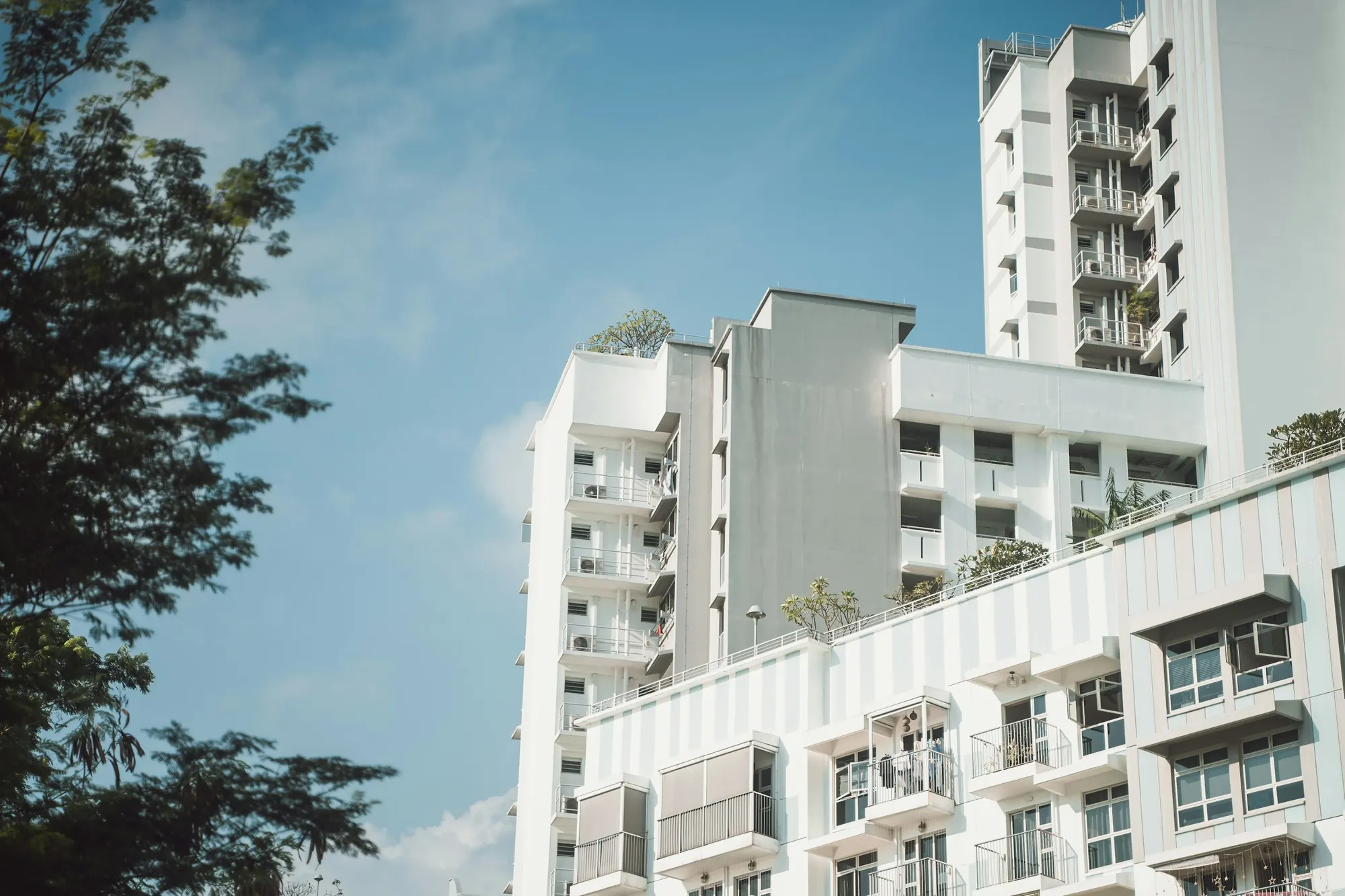
Responsible property planning
Grow your wealth with a plan you can hold through a bad year
Two properties can build wealth over time. They also double the loans, the upkeep and your exposure to one market. Before a second purchase, check that your household can carry both homes if interest rates rise or a tenant leaves.
- Test the loan at 4%, the rate banks use for TDSR, as well as at your package rate.
- Keep a cash buffer for instalments, maintenance and property tax.
- Count every cost of the move, including stamp duty, legal fees, the CPF refund and any SSD.
- Think about who will buy each property from you later.
- Revisit the plan when your income, your family or the rules change.
Property prices can fall as well as rise, and rental income is never guaranteed. Past transactions do not predict future returns. Nothing on this page promises a return, a saving or a loan approval.
Speak to a consultant
Have your numbers checked before you commit
Send your details and, if you like, the figures from the calculator. A SaveWithProperty consultant will go through the loan, the CPF and the timing with you.
- We read your details and calculator figures.
- A consultant contacts you by WhatsApp or phone, whichever you choose.
- You decide what to do next. There is no obligation.
FAQs
Questions couples ask about decoupling
Is decoupling legal in Singapore?
Yes. It is a sale of part of a property between co-owners, taxed like any other sale. The transfer has to be genuine: the outgoing spouse gives up the share, including any rent or sale proceeds from it. IRAS can disregard arrangements it considers tax avoidance.
Does the spouse buying the share pay ABSD?
It depends on what they already own. When you buy more of a home you already co-own, IRAS works out the ABSD rate from your existing property count. A Singapore Citizen whose only residential property is the home being decoupled pays no ABSD on the share. Buyer's Stamp Duty still applies.
Does seller's stamp duty apply to the share?
Yes, if the share is sold within the holding period. For homes bought on or after 4 July 2025, SSD applies for four years at 16%, 12%, 8% and 4%. For homes bought from 11 March 2017 to 3 July 2025, it applies for three years at 12%, 8% and 4%. It is worked out on the higher of the price or market value of the share.
What happens to the CPF the selling spouse used?
It goes back to their CPF account from the sale proceeds, with accrued interest. Below 55, the refund goes to the Ordinary Account. From 55, it first tops up the Retirement Account to the Full Retirement Sum.
Before anyone signs
Talk your numbers through with a consultant
Send your figures to SaveWithProperty and we will check the loan, the CPF refund and the timing with you, so both of you know what the decoupling really costs.